Choosing Modern Dining Chairs for a business is not just a design decision. The right chairs must welcome guests, suit the room, and hold up through daily use. A busy café has different needs from a hotel dining room. Picture a narrow aisle, a server carrying two plates, and chairs pulled back from a small table. Comfort and clearance matter as much as appearance.
Commercial seating consultant Daniel Mercer puts it this way: “A dining chair earns its place when it feels comfortable, fits the room, and stands up to service.” Use that idea to guide the selection. Compare seat height with your tables, check whether guests can sit and rise easily, and look closely at joints, finishes, and upholstery seams. Small details count. A smooth, wipeable surface may save time between sittings; a bulky frame may slow staff in a crowded space.
This guide explains how to match chair styles, materials, comfort, and budget to your business. It also considers maintenance and layout, so the final choice works beyond the showroom. A chair can look perfect under bright display lights and feel wrong after a full shift. That is worth remembering. No single model suits every venue, and even careful planning can miss something. When possible, test a sample in your actual space before ordering. A few hours of real use can reveal details that a product photo cannot.
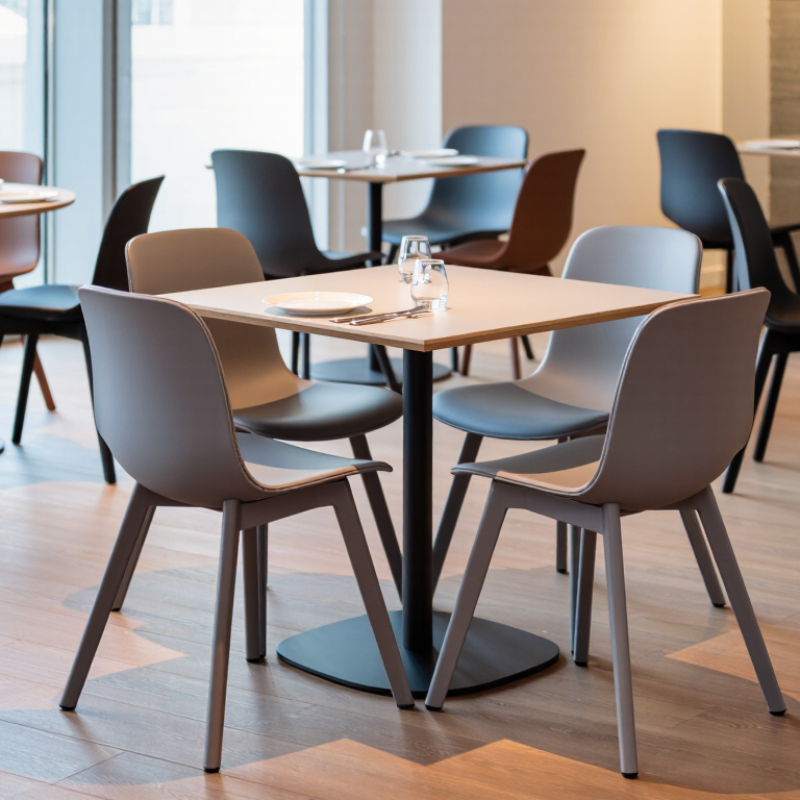
Identify Your Business’s Dining Space and Seating Requirements
Before choosing modern dining chairs, map how guests actually move through the room. Measure table spacing, aisle width, doorways, and any narrow turns where chairs must pass. Then note peak covers, average visit length, and whether the space serves quick lunches, long dinners, or both. A floor plan can look efficient on paper and still feel cramped at lunch. Test it with chairs pulled out.
Match seating to the room’s pace and physical demands. Lightweight chairs help staff reset tables quickly; upholstered seats may suit longer meals, but need more cleaning and upkeep. The National Restaurant Association’s 2024 State of the Restaurant Industry report projected $1.1 trillion in U.S. restaurant sales. That scale makes durable, easy-to-maintain seating a practical investment, though sales projections alone cannot predict your own traffic. Check seat height against table height, and leave enough room for guests to sit without bumping neighboring chairs. A small mock-up helps. It may reveal awkward gaps you missed.
Tips: Tape chair footprints onto the floor and simulate a busy service. Ask staff to walk the aisles while someone pulls out a chair. Recheck your layout after a week; real use can expose assumptions.
| Dining Space | Typical Seating Requirements | Chair Features to Consider | Useful Size Reference | Layout and Operations Check |
|---|---|---|---|---|
| Full-service dining room | Comfortable seating for longer meals; a mix of two-person and larger tables can support different party sizes. | Upholstered or contoured seats, stable frames, and durable, easy-to-clean finishes. | Dining chairs commonly have a seat height of about 17–19 in. (43–48 cm), paired with tables around 28–30 in. (71–76 cm) high. | Check chair pull-back space and service paths before setting table positions. Keep accessible routes clear. |
| Quick-service dining area | Frequent guest turnover and regular cleaning; seating may need to be rearranged throughout the day. | Lightweight chairs with wipe-clean surfaces, reinforced joints, and floor-friendly glides. | Use standard dining-height chairs, typically with 17–19 in. (43–48 cm) seat heights, for standard-height tables. | Choose chairs staff can move safely and clean around. Confirm that table legs do not restrict chair placement. |
| Café or compact dining space | Flexible layouts for small groups, solo diners, and limited floor area. | Compact profiles, armless designs, and chairs that can be moved or stacked if storage is needed. | Measure the table height and underside clearance; allow enough room for guests to sit and stand without obstruction. | Map doorways, counters, and circulation paths first. Avoid layouts that narrow accessible routes. |
| Banquet or event dining area | Large, changeable seating plans and efficient setup or breakdown between events. | Stackable chairs with sturdy frames, cleanable upholstery or shells, and clearly stated stacking limits. | Select chair and table heights as a matched set; standard dining-height seat and table ranges are approximately 17–19 in. and 28–30 in., respectively. | Verify storage capacity, chair weight, stacking height, and the clear width of event routes before ordering. |
| Outdoor dining area | Seating exposed to weather, temperature changes, and more frequent surface cleaning. | Outdoor-rated materials and finishes; confirm resistance to moisture, UV exposure, and corrosion as relevant to the site. | Check seat and table heights together, and confirm that chair feet remain stable on the actual paving or decking. | Plan for drainage, wind exposure, storage, and unobstructed access between tables. |
| Accessibility and final fit check | A usable route and seating arrangement that accommodates guests with different mobility needs. | Consider a range of seating options and ensure chairs can be moved without blocking designated accessible spaces. | In the U.S., accessible routes are generally at least 36 in. (915 mm) wide, subject to applicable exceptions and requirements. | Check local accessibility and building requirements. Measure the finished layout, including occupied chairs, before finalizing quantities. |
FAQS
Metal frames wipe clean quickly and tolerate frequent movement. Solid wood can be refinished, but moisture and scratches need prompt attention. No material is maintenance-free.
Check the joints and protective finish, especially near table edges where chairs often bump. Wipe up spills promptly. Small marks can add up.
They offer extra comfort, but fabric can trap crumbs and pale colors show stains. Choose tightly woven upholstery and test a sample with your usual cleaning products.
Ask staff to sit in a sample for at least ten minutes. Check seat support and whether the edge presses behind the knees. Photos don’t tell you that.
Compare seat height with the table, then check legroom with the chair pulled out. Measure the full width, including arms, and leave clear space for movement.
Consider some chairs with arms for guests who need help sitting or standing. Armless options may make transfers easier for some people. Check the layout carefully.
Consider the lighting, table shape, and flooring alongside the room’s overall feel. Repeat a finish or shape for visual rhythm, but too much matching can feel staged.
Warm lamps can make wood look redder, while bright windows can change how fabric appears. Test chairs on your flooring, too. I’ve judged samples too quickly before.
Conclusion
Choosing Modern Dining Chairs for a business starts with understanding the dining space, expected customer volume, and seating needs. Consider how many chairs fit comfortably while preserving clear walkways and allowing guests and staff to move easily. Compare materials for durability, ease of cleaning, and suitability for daily use, then assess seat height, dimensions, cushioning, and accessibility to help ensure a comfortable experience for a wide range of customers.
Chair style should complement the business’s interior and create a consistent atmosphere without sacrificing practicality. Before making a purchase, compare total costs, warranty coverage, delivery details, and supplier support. Balancing appearance, comfort, maintenance, and long-term value can help businesses select seating that serves their space effectively and remains a dependable part of the dining area.
